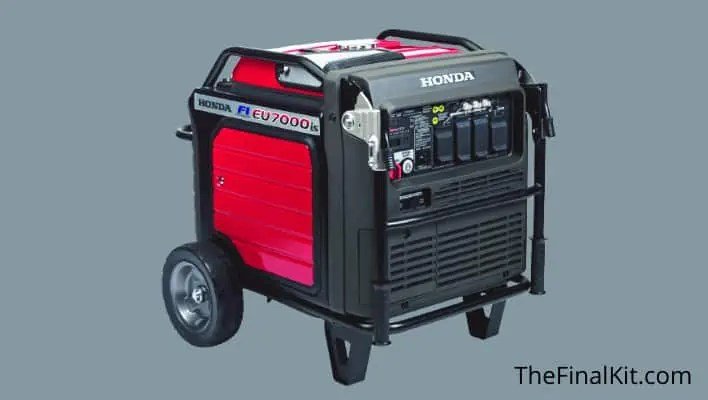
When the power grid falters, a reliable portable generator isn't just a convenience; it's a lifeline. And in the often-overwhelming world of portable power, the Honda EU6500is has long stood as a benchmark, a name synonymous with quiet efficiency and unwavering reliability. But how does this venerable workhorse stack up in today's crowded market, and what should you consider when facing the critical choice of a Honda EU6500is vs. competitors in a buyer's guide?
Let's cut through the noise and equip you with the insights you need to make an informed decision, whether you're powering a construction site, an RV, a remote cabin, or just keeping the lights on at home during an outage.
At a Glance: Why the Honda EU6500is Gets Noticed
- Powerhouse Performance: Delivers a robust 5500 rated watts (6500 max), capable of running major appliances, sensitive electronics, and power tools.
- Whisper Quiet: Operates as low as 52 dB at ¼ load – quieter than a normal conversation.
- Clean Power: Advanced inverter technology ensures safe, stable power for sensitive devices like laptops and medical equipment.
- Exceptional Fuel Efficiency: Eco-Throttle system adapts engine speed to demand, offering up to 18 hours of runtime on a 5.1-gallon tank.
- Built to Last: Features a durable Honda GX390 OHV engine with electric start.
- Portable Design: Comes standard with a folding handle and wheel kit for easier transport despite its 286 lbs.
The Benchmark: What Makes the Honda EU6500is a Gold Standard?
Before we pit it against alternatives, let's understand why the Honda EU6500is often sits atop comparison lists. It's more than just a generator; it's an engineering marvel designed for discerning users who prioritize performance, quietness, and longevity.
At its core, the EU6500is boasts a Honda GX390 OHV engine, renowned for its industrial-grade durability and fuel efficiency. This isn't just any engine; it's a testament to Honda's legacy in reliable power equipment. Paired with an electric start (and a backup recoil for good measure), getting this generator up and running is consistently hassle-free.
But the real magic lies in its advanced inverter technology. Unlike traditional generators that produce raw, "dirty" power, the EU6500is converts raw AC power to DC, then back to clean AC power. This results in a stable sine wave, crucial for protecting your delicate electronics—think laptops, smart TVs, and medical devices—from voltage spikes and fluctuations. This clean power output is a non-negotiable for many users today.
Then there's the fuel efficiency and run time. Thanks to its fuel-injection system and Honda's proprietary Eco-Throttle technology, the engine intelligently adjusts its speed based on the actual load. This means less fuel consumed and significantly longer run times. Imagine up to 18 hours of power at 25% load on a single 5.1-gallon tank—that's peace of mind during extended outages or long weekends away.
Perhaps its most celebrated feature, however, is its remarkably quiet operation. At just 52 dB at ¼ load, it's quieter than many dishwashers and allows for normal conversation nearby. This makes it ideal for residential backup, camping, outdoor events, or job sites where noise pollution is a concern. The built-in folding handle and wheel kit, despite its 286 lbs, make it surprisingly manageable for its class. You can learn more about its specific capabilities and features as you explore the Honda 6500 generator.
Understanding Your Needs: The Foundation of Any Generator Purchase
Before you even think about competitors, take a moment to honestly assess your own power requirements. This isn't just about watts; it's about your lifestyle, your budget, and your priorities.
What Do You Absolutely Need to Power?
Start by listing the appliances and tools you plan to run. Don't guess; check their wattage requirements. Remember:
- Starting (Surge) Watts: The momentary burst of power an appliance needs to start (especially those with motors like refrigerators, AC units, pumps).
- Running (Rated) Watts: The continuous power an appliance needs to operate.
The EU6500is offers 6500 max watts and 5500 rated watts, with a surge output of 7000 watts. This capacity is substantial, easily handling items like a central air conditioner (2-ton), refrigerator, microwave, lights, and a well pump simultaneously. For a deeper dive into how to calculate your needs, consider sizing your generator correctly.
Where and How Will You Use It?
- Home Backup: Will it be a critical lifeline during outages? Do you need to power sensitive electronics?
- Job Site: Will it withstand harsh conditions and power heavy-duty tools? Is portability crucial?
- RV/Camping/Outdoor Events: Is quiet operation paramount? How long do you need it to run? Is clean power for entertainment systems important?
What's Your Budget?
Quality often comes with a price tag, and the Honda EU6500is is certainly an investment. Understand that while some competitors might offer lower upfront costs, they might compromise on features, durability, or efficiency in the long run.
Dissecting the Competition: Where Alternatives Step In (and Out)
When we talk about "competitors" to the Honda EU6500is, we're not always looking for exact clones. Instead, we're considering other portable generators that might serve similar purposes but excel (or fall short) in different areas. These can range from other premium brands to more budget-friendly options, or even those focusing on different fuel types or specific niche features.
Categories of Competitors:
- Premium Inverter Rivals: Brands like Yamaha, Generac (certain models), or even high-end offerings from established names sometimes produce inverter generators in a similar wattage class (5000-7000 watts).
- Potential Strengths: Might match Honda on quietness, clean power, or offer unique features like advanced displays or connectivity.
- Potential Weaknesses: Often similar price points, sometimes slightly lower fuel efficiency, or less widespread service networks than Honda.
- Conventional (Open Frame) Generators: Many brands (e.g., Champion, DuroMax, Westinghouse, Generac) offer conventional generators with higher wattage output at significantly lower price points.
- Potential Strengths: Much cheaper per watt, can provide immense raw power for heavy-duty tools or entire home circuits (if connected correctly).
- Potential Weaknesses: Very loud, produce "dirty" power unsuitable for sensitive electronics, much less fuel-efficient, heavier and less portable for their wattage, no Eco-Throttle equivalent. This highlights the difference between inverter and conventional generators.
- Dual Fuel/Propane Generators: Some competitors offer dual-fuel options (gasoline and propane) or dedicated propane generators.
- Potential Strengths: Propane burns cleaner, has a longer shelf life, and can be easier to store than gasoline. Propane tanks are also interchangeable.
- Potential Weaknesses: Propane typically offers slightly less power output and is less fuel-efficient than gasoline, meaning shorter run times per equivalent energy unit.
- Entry-Level Inverter Generators: Smaller, cheaper inverter generators exist, but usually at lower wattages (e.g., 2000-3500 watts). Those in the 5000-7000W range from lesser-known brands might exist.
- Potential Strengths: Lower price.
- Potential Weaknesses: Often significantly louder, less reliable engines, poorer fuel efficiency, fewer features, and questionable long-term durability and customer support.
Key Comparison Criteria: Beyond the Specs on the Box
When evaluating the Honda EU6500is against any competitor, dig deeper than the headline numbers. Here's what truly matters:
1. Power Output: Max, Rated, and Surge Capacity
- Honda EU6500is: Max 6500W, Rated 5500W, 7000W Surge. This is ample for most residential backup needs, including air conditioners, and robust for job sites.
- Competitor Check: Does the competitor clearly list all three? Is the "rated" (running) wattage sufficient for your continuous needs, not just what it can momentarily surge to? Some budget models inflate "max" wattage without a strong "rated" output.
2. Inverter Technology: Clean Power, Always
- Honda EU6500is: Produces clean, stable sine wave power (Total Harmonic Distortion or THD typically < 3%). This is critical for computers, medical devices, and modern appliances with sensitive microprocessors.
- Competitor Check: Is it truly an inverter generator, or a conventional generator with an AVR (Automatic Voltage Regulator)? AVRs help stabilize voltage but don't clean up the waveform like an inverter. Always confirm the THD rating if available; lower is better. If sensitive electronics are on your list, this is non-negotiable.
3. Fuel Efficiency & Run Time: How Long Can You Rely On It?
- Honda EU6500is: Up to 18 hours at 25% load on a 5.1-gallon tank, thanks to Eco-Throttle and fuel injection. This means fewer refueling stops and less overall fuel consumption.
- Competitor Check: Many generators publish run times at 50% or 100% load, which are often much shorter. Look for run times at lower loads (25% or 1/4) for a true comparison. Does it have an equivalent "economy" mode? A smaller fuel tank might mean more frequent refueling. exploring different generator fuel types can also impact efficiency and storage.
4. Noise Level: The Silent Advantage
- Honda EU6500is: 52 dB at 1/4 load, 60 dB at rated load. This is exceptionally quiet for its power class, comparable to background conversation or a quiet air conditioner.
- Competitor Check: Noise ratings are usually measured at 7 meters (23 feet). Be wary of ratings that sound too good to be true, or are only given at extremely low loads. Conventional generators, even with comparable wattage, can easily hit 70-80 dB or higher, which is like a vacuum cleaner or noisy restaurant—unsuitable for residential use or close-quarter job sites.
5. Portability & Design: Can You Move It?
- Honda EU6500is: 286 lbs, but comes with a standard folding handle and wheel kit, making it manageable for two people or one strong individual on level ground. Dimensions are relatively compact (27.6 x 22.4 x 25.5 inches).
- Competitor Check: Weight and dimensions vary widely. Does it come with a wheel kit and handles, or are they optional/non-existent? Consider where you'll store it and how often you'll need to move it. Some high-wattage generators are essentially stationary units without easy transport.
6. Features & Convenience: Quality of Life Upgrades
- Honda EU6500is: Electric start (with battery), backup recoil start, fuel injection, Eco-Throttle, oil alert, hour meter (often standard or easily added), 120/240V options, parallel capability (optional kit).
- Competitor Check: Does it have an electric start, or is it pull-start only for a unit of this size? Are convenient features like fuel gauges, low-oil shutdown, and overload protection included? Does it offer parallel capability if you ever envision needing more power down the line?
7. Reliability, Warranty, & Support: The Hidden Value
- Honda EU6500is: Renowned for long-term durability, low maintenance, and excellent resale value. Supported by Honda's extensive customer service network and a robust warranty.
- Competitor Check: This is where many budget competitors fall short. What's the warranty period (parts and labor)? Is there readily available service and parts support in your area? Read reviews specifically about long-term reliability and customer service experiences. A cheaper generator isn't a bargain if it breaks down frequently or can't be repaired. You'll want to maintain your generator for longevity, so access to parts is crucial.
8. Price & Value: Is the Premium Worth It?
- Honda EU6500is: Commands a premium price, reflecting its advanced features, quiet operation, fuel efficiency, and legendary reliability.
- Competitor Check: A lower price point is tempting, but consider the total cost of ownership. Factor in potential higher fuel consumption, maintenance costs, and the frustration of breakdowns or excessive noise. For critical applications, the "value" of reliability and peace of mind often outweighs a lower initial cost.
Common Generator Buying Pitfalls to Avoid
- Underestimating Power Needs: Don't just buy "a big one." Calculate your specific wattage requirements, including surge watts.
- Ignoring Clean Power: If you plan to run any electronics, an inverter generator is a must. A conventional generator can fry sensitive circuits.
- Overlooking Noise: What sounds "tolerable" in a review video can be maddeningly loud in your backyard or campsite.
- Neglecting Maintenance: Generators need regular check-ups, oil changes, and fuel stabilization. Neglecting this will shorten its lifespan. For guidance on this, consider best practices for generator safety which often ties into proper maintenance.
- Cheap vs. Value: A low price tag can sometimes indicate compromises in engine quality, components, or overall design. Research the brand's reputation thoroughly.
Frequently Asked Questions About 6500-Watt Generators
Q: Can a 6500-watt generator run a central air conditioner?
A: Yes, a Honda EU6500is with 5500 rated watts and 7000 surge watts can typically run a 2-ton (24,000 BTU) central air conditioner, along with other essential appliances, provided the AC unit isn't exceptionally large or inefficient. Always check your AC's specific starting and running wattage.
Q: Is the Honda EU6500is suitable for a whole house?
A: For a whole house in terms of powering every single circuit, a 6500-watt generator might be insufficient. However, for providing essential backup power to critical circuits (like refrigerator, freezer, lights, furnace fan, well pump, and even a medium-sized AC unit) via a transfer switch, it's an excellent option for many homes.
Q: How does Eco-Throttle work and why is it important?
A: Eco-Throttle (or similar "economy" modes on other inverters) automatically adjusts the engine speed to match the electrical load. If you're only running a few lights, the engine idles lower, saving fuel and reducing noise. When you plug in a refrigerator, the engine revs up to meet the demand. This is crucial for fuel efficiency, longer run times, and quieter operation compared to generators that run at full RPM constantly.
Q: Is it safe to store gasoline for a generator?
A: Yes, but with proper precautions. Use approved, sealed fuel containers, ideally kept in a cool, dry, well-ventilated area away from living spaces and heat sources. Add a fuel stabilizer to extend shelf life (up to 12-24 months for treated fuel). Always adhere to local regulations for fuel storage.
Q: Can I connect two EU6500is generators for more power?
A: Yes, the Honda EU6500is offers parallel capability with an optional parallel kit. This allows you to connect two identical EU6500is units to effectively double your continuous power output, useful for exceptionally large loads or extended heavy usage.
Making Your Decision: Matching Generator to Lifestyle
Choosing a generator isn't just about comparing spec sheets; it's about investing in peace of mind and reliable power when you need it most.
- If Quiet is King & Clean Power is Essential: The Honda EU6500is remains an undisputed leader. For home backup, RVing, or any scenario where noise and sensitive electronics are factors, its premium features truly shine. You're paying for advanced technology, legendary reliability, and a superior user experience.
- If Budget is Tight, But Power is Paramount (and Noise Isn't a Huge Concern): A conventional generator might be a more affordable option. Just be prepared for the noise and remember it's not suitable for sensitive electronics. This is often a trade-off for construction sites where noise isn't the primary concern and power tools are the main draw.
- If Fuel Versatility is a Priority: Explore dual-fuel inverter generators from reputable brands. These offer the flexibility of running on either gasoline or propane, which can be a significant advantage depending on fuel availability and storage preferences.
- If Size and Weight Are Your Absolute Top Priorities (and You Need Less Power): Consider smaller inverter generators (2000-3500 watts). These are incredibly portable but won't power a large AC or multiple heavy-duty appliances.
Your Next Step to Reliable Power
The Honda EU6500is sets a high bar, a testament to what a portable generator can truly be: powerful, quiet, efficient, and incredibly reliable. While its price reflects this premium position, for many, the investment pays off in years of trouble-free operation and the invaluable peace of mind it provides.
Take your time. Compare not just features, but also the reputation for reliability, the quality of customer support, and the actual user experience. Once you've aligned your needs with a generator that meets them, you'll be ready for whatever power challenges come your way.